
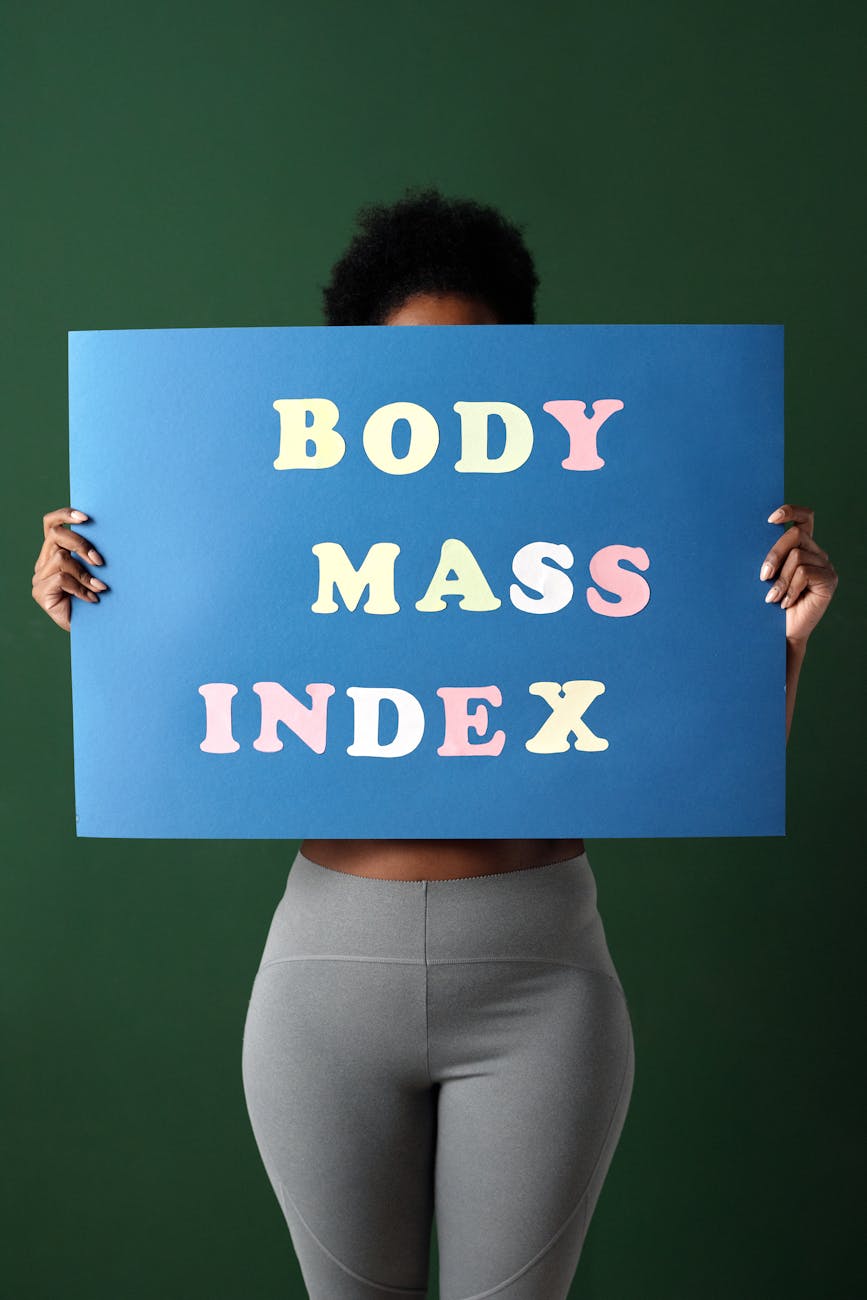
BMI is a flawed proxy health measure, but its frequent use can feel out of your control. What can you do to mitigate the harms of BMI?
Once upon a time, a woman in her 30s nervously shuffled into her doctor’s office. Her obsession with her weight was at an all-time high and she knew it wasn’t right to be purging everything she ate, yet she didn’t know how to stop.
“Why have you come to see me today?” the doctor asked in a routine fashion.
The woman hesitated, steeling herself. “I think I have a problem with food,” she admitted.
“Alright, well jump on the scales for me and we’ll see what we’re dealing with.”
The woman did as she was told. The doctor recorded her weight.
“Well, your BMI is good so whatever you’re doing, keep doing it.”
That consult could have been the breakthrough that woman needed. But it wasn’t. Instead, it reinforced her belief that her worth was tied to her weight, and she remained stuck in a restrict-binge-purge cycle for several years afterwards.
I’ve seen this same scenario play out many times… A young woman told that her BMI (body mass index) was too high and she needed to lose weight. When she pointed out that she only ate 1200 calories per day (the caloric needs of a toddler) and was otherwise healthy, the doctor simply suggested she cut it down to 800 instead.
Or the 7 year old who was weighed at a routine consult and heard the nurse tell their mother that they were, “Too heavy for their height”. They then started to call themselves fat and spent hours running in circles in a bid to “get skinny”.
These are not isolated incidents. They reflect the flaws of the medical establishment’s reliance on BMI as a measure of health. A reliance on roughly calculated numbers and arbitrary cut-offs of ‘underweight’, ‘healthy weight’ and ‘overweight’ (that have actually shifted over time) simply has no relevance in the day-to-day lives of our clients.
A measure of population health, not individual health
BMI has been around since the dark ages. Okay not the dark ages, but since the 1800s anyway. And it’s done a pretty good job of measuring population health, because the errors at either end of the scale (you can be either too short or too tall for the formula to ‘work’ on you) cancel each other out when you’re looking at large numbers.
On an individual level though, it’s not great. Even you’re an average height, it won’t distinguish between muscle, fat and bone mass. And it can’t see your cardiorespiratory fitness, your metabolic health, or your mental health. One study of over 40,000 adults found that nearly half of those classified as ‘overweight’ by the BMI, and 29% of those classified as ‘obese’ were actually metabolically healthy. And 30% of ‘normal weight’ individuals were metabolically unhealthy. Those are big numbers of misclassifications.
Yet, in many medical settings, BMI might dictate treatment decisions and access to care.
You probably already know the flaws of BMI… But the fact that it IS used routinely means that you may be receiving referrals for “Elevated BMI, needs to lose weight” every day. So what do you do?
A different approach
Regardless of their BMI, there’s no denying that some individuals would benefit from losing weight. But, surprise surprise, telling them to lose weight doesn’t actually help anything. That’s because it’s focused on the problem, not the solution.
A solutions-focused approach would be asking about their stress levels, how they’re sleeping, their social connections, if they are getting regular meals, if they are exercising in ways that they enjoy (and not for punishment or to ‘earn’ food), if they’re including some colourful vegetables with their meals, etc. This isn’t as easy to record as a number or a BMI category, but it is much more meaningful and helpful in real life.
It sounds simple (and it is) but this mindset shift actually isn’t always easy, especially when BMI has been so ingrained in medical culture for so long. But putting a few simple coaching shifts in place can make ALL the difference.
So I’ve put together a free cheat sheet for you – 5 Coaching Shifts to Dismantle Disordered Eating.
This one-pager will take you through:
– The #1 mindset shift your clients need to make (hint: it’s not about weight loss)
– Why listening to your body isn’t always the answer – and what to do first
– How focusing on portion sizes can actually fuel binge eating (and what to do instead)
– How to challenge diet culture thoughts without overwhelming your clients
– Why food strategies alone aren’t enough – and what else your clients really need
The Bottom Line
BMI was never meant to be a defining measure of personal health, and the way it’s used can be fairly useless at best, and downright damaging at worst. Health is more than a number or an arbitrary category – so let’s treat our clients in ways that help them in the real world instead.
The 5 Coaching Shifts to Dismantle Disordered Eating cheat sheet will give you simple, actionable strategies to ensure that when a young woman walks into your office and tells you she has a problem with food, you’ll know exactly how to handle that scenario.
