
Many clients struggle with the fear of weight gain if they are not restricting food. Here are some practical steps to overcome this.
Many of my clients already know they’re stuck in a disordered eating pattern. Talking it through is helpful for them to pinpoint how the restrict-binge cycle is affecting them, but knowing it and doing something about it are two entirely different things.
And the main thing that keeps them stuck? The fear of weight gain.
They want food freedom, but the idea of letting go of restricting – especially eating more of their ‘trigger foods’ – is utterly terrifying.
I’m not a psychologist and I encourage all of my clients to have psychological support. But over the years, I’ve found one thing really useful when it comes to helping with the fear of weight gain.
Making the mindset shift that their body is not working against them, it has been protecting them from the threat of food scarcity. And now, they need to help it feel safe again.
Regaining the body’s trust
When someone restricts food, their body perceives it as a threat every bit as serious as being chased by a predator or going through a famine. So it reacts accordingly to protect against weight loss. Because losing weight thousands of years ago was definitely not a sign that everything was hunky-dory!
This is why, when your clients begin eating regular meals, they might feel hungrier than ever. Have you ever had a client tell you that if they eat breakfast it just makes them even hungrier? Often the culprit is that the body doesn’t trust that food will keep coming. It’s still preparing for another famine.
The only way to regain that all-important trust is to continue to eat regularly and to honour the increased hunger by eating more food. It’s scary because they will likely gain weight. But it is necessary to calm their body down. When the trust has been regained, the body usually settles at a natural, stable weight that is sustainable without obsessive control.
Proof that weight gain (at first) is normal
The Minnesota Starvation Experiment taught us so much about how the body and brain react to being semi-starved (on the same amount of calories as most diets). This 1940s research study showed how previously fit and healthy men became anxious, depressed, and ruled by constant food-thoughts when semi-starved. Anyone who has been on a diet knows how this feels!
When the men were allowed to eat freely again, they initially gained weight past their original set point. Their bodies were acting to protect them against another famine. But as their bodies began to trust that food was abundant, their weight naturally stabilized.
What is the worst that could happen?
I find it helpful to have an open discussion about the fear of weight gain. To me, the point of this discussion is not to try to ‘fix’ my client’s thoughts. It’s simply to acknowledge how scared they are, to gently explore why, and to find out if they are willing to move through their fear in order to find true food freedom.
A useful question is to ask what the worst thing is that could possibly happen if they gained weight. Usually it’s that someone will say something nasty to them, or similar. It’s almost always to do with the judgement of others.
And while it can certainly be helpful to chat about how the worst case scenario isn’t actually that bad, another tack is to explore what this fear has already cost them.
What they have said No to because they were afraid of what other people might think or say about their body? Trips to the beach? Social dinners? Holidays?
To round off the discussion, I like to get my clients to do some future-pacing. Can they imagine themselves 5 years from now, at peace with their body? What would they say Yes to? How would it feel? Would their future self tell their present self that getting through this initial period of weight gain was worth it?
Hopefully the answer the Yes.
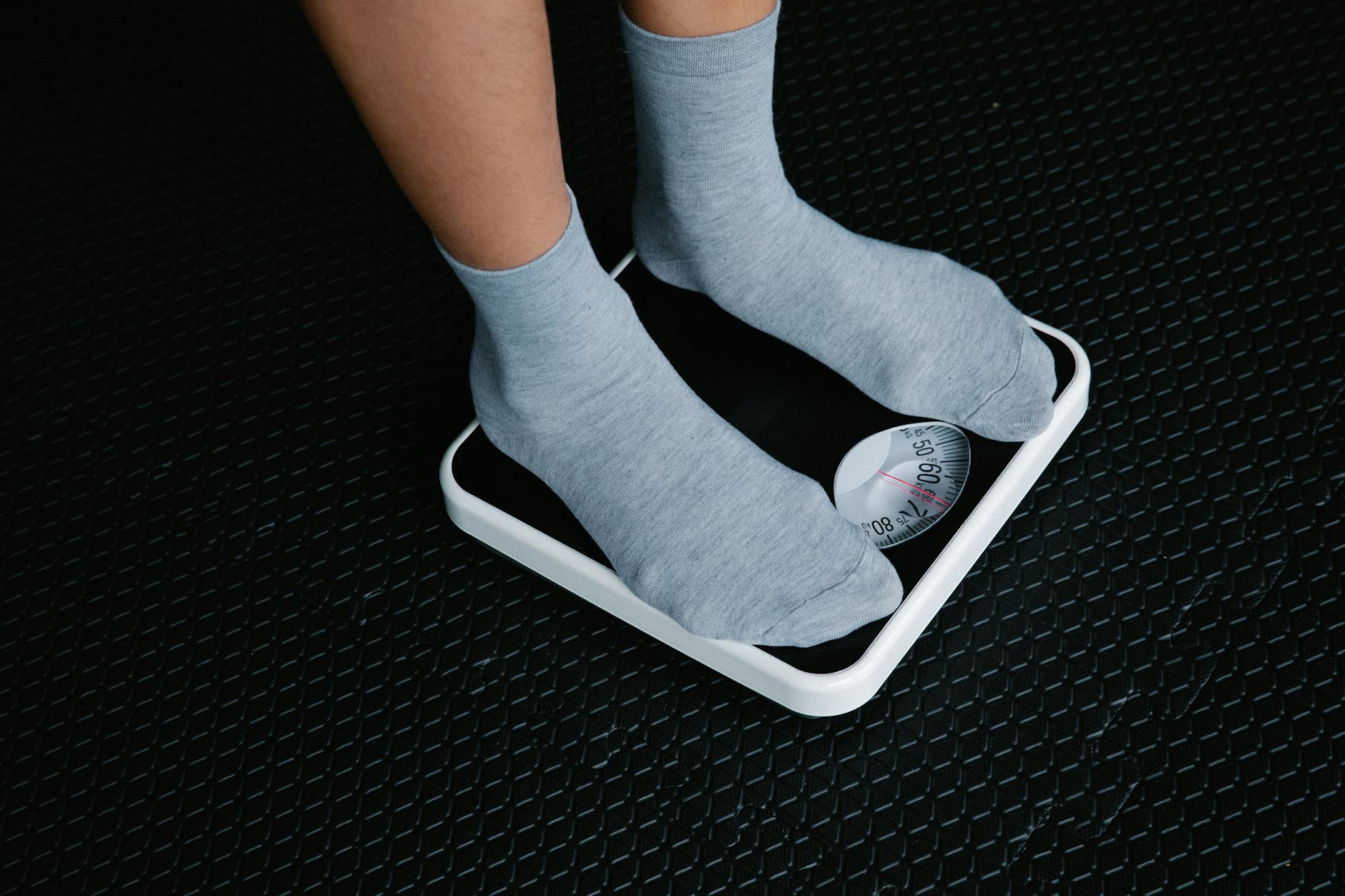
Practical step: throw out the scale
There’s no point making this harder than it needs to be. Weighing themself will only fuel anxiety and increase the desire to restrict again. Plus it distracts from the real progress – less obsessive thoughts about food, less episodes of binge eating, improved energy, etc.
Throwing out the scale can be incredibly freeing for some clients, also. A powerful and symbolic way for them to show themselves that the scale is no longer going to dictate their worth.
Bonus points if they also buy clothes that fit! Too often I hear that my clients are waiting to ‘deserve’ new clothes by shrinking their body. The point of clothes is to fit you, not the other way around.
The black and white discussion: salad vs dessert
Diet culture sorts foods into two neat categories: good and bad. It promotes an extremely black and white way of looking at things that often our clients carry over into other aspects of their lives as well.
“If I eat a ‘bad’ food, I’ll gain weight.”
“If I don’t track my calories, I’ll lose control.”
Let’s flip that thinking around for a second: If you eat one salad, will you lose weight? Of course not! So how come we believe that eating one dessert will make you gain weight?
This is usually a lightbulb moment.
Why forbidden foods need to be included, without restriction
To truly heal, clients need to prove to their body that food is always available. All food. It’s not about how much food their body needs physically, it’s about how much their body needs to feel safe.
Intentionally including forbidden foods with their meals is extremely helpful. Showing the body that these foods are abundant and there is no need for restriction means that over time the food loses it’s power. The number of clients I’ve had who say to me in a shocked voice, “I just don’t feel like it any more. I actually feel like vegetables!” makes me laugh in the best way possible.
The path to food freedom
Overcoming the fear of weight gain isn’t about forcing body acceptance overnight. It’s about building trust over time. Weight gain is a normal (and usually necessary) part of healing. Their body isn’t working against them by gaining weight, it’s actually doing it’s best to protect them. So now they need to support their body to calm down by demonstrating that food is plentiful.
This mindset shift around weight gain naturally slots in with the nutrition strategies of my Food Freedom Framework. If you’d like the cheat sheet version to help guide your consults, download it here.
