
Dietitian Lucy Carey explains why a continuous glucose monitor may not be the God-send you think it is
I didn’t think it would end like this.
I thought it would be a fun experiment but barely three days later I was begging my partner to get the damn thing off me…
You’re used to tracking your heart rate and blood pressure, and your alarm just went off to remind you that you’ve been sitting for too long.
But are you monitoring your blood glucose levels?
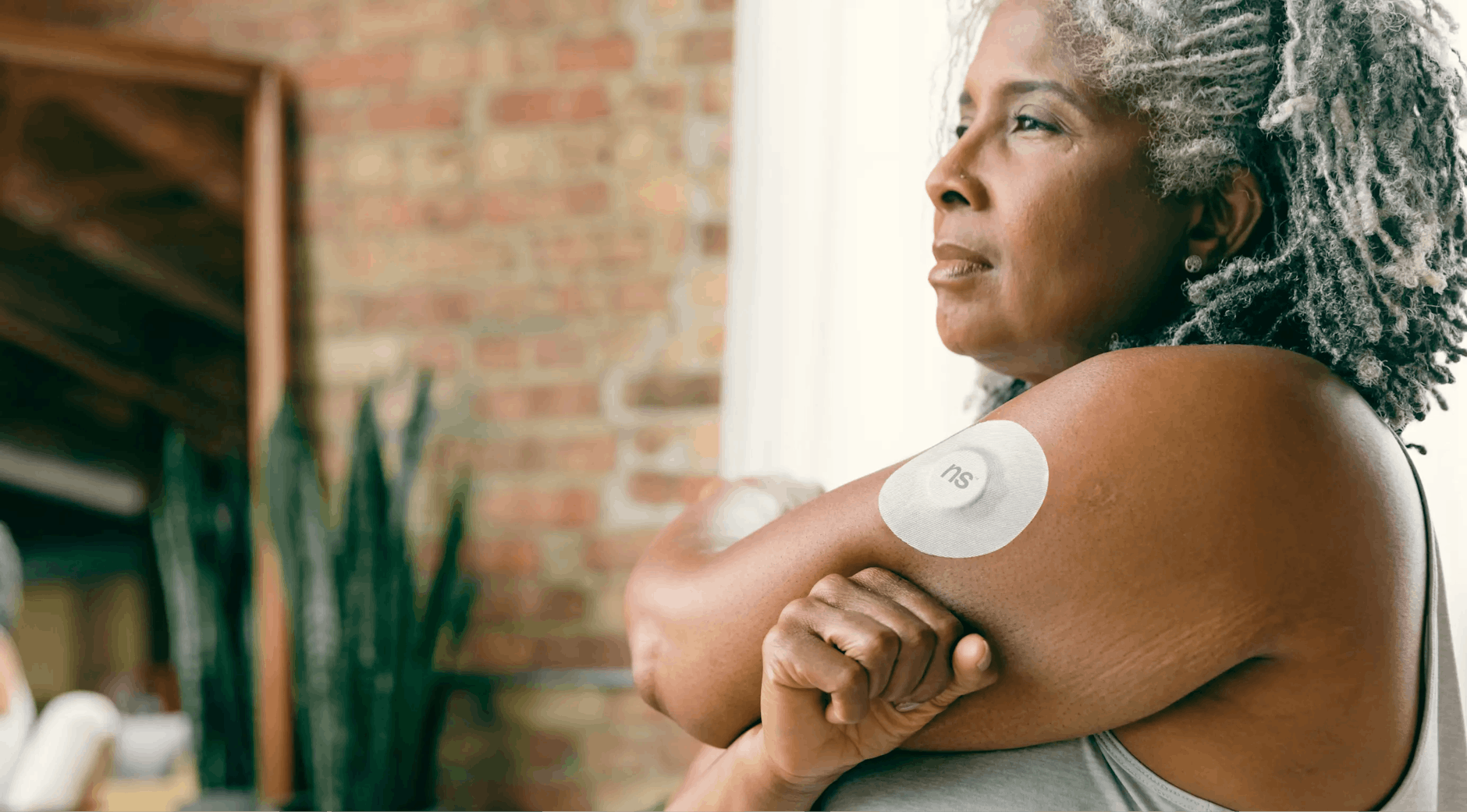
Continuous glucose monitors, or CGMs, are popping up all over your social media feed. These trendy round patches worn on the back of the arm were originally made to help patients with diabetes, but now CGMs are being sported by non-diabetics looking to uplevel their health.
I’ve been a dietitian for over a decade now, so I’m no stranger to the rise of health monitoring. I’ve seen firsthand the effects an endless stream of health data can have on my clients – not all of it good.
So what’s the deal with CGMs? Are they the ultimate personalised nutrition assistant? Or are they just a nagging pain in the butt?
There’s only one way to find out.
I pushed the disc onto the back of my arm and the needle entered and exited quickly, leaving a small filament in its place. This flexible sort of stick would sit under my skin and measure my blood glucose levels every minute for the next two weeks, conveniently delivering its findings to my phone via bluetooth.
Little did I know, I would dump my CGM in the trash in less than 72 hours. Here are the three reasons why.
1. It made me anxious about everything I ate
I usually try to showcase a healthy relationship with food. This means that most of the food I eat nourishes my body, but I’m no stranger to a piece of chocolate cake to nourish my soul.
Until the CGM.
The judgement of the little blue line on the CGM app was as loud as an obnoxious mother-in-law. And it got to me.
When my blood glucose spiked after eating kiwifruit, I started to avoid kiwifruit. When I wanted a chocolate biscuit, I stopped myself… Only to crave chocolate biscuits and kiwifruit so much I wanted to binge on them.
Thankfully, I caught myself before it got too bad. But it would have been easy to slip into a state where all of my food decisions were made with the goal of keeping the blue line as flat as possible. You may think that’s the point of having the CGM, but it’s actually not quite so simple.
Blood glucose levels don’t just change depending on what you eat and the exercise you do. Your stress levels, medication, hormones, illness… It all affects how much glucose your body releases into your system.
Even with this knowledge, it’s hard not to feel that any spike in blood glucose levels is your fault. I began to override my usual intuitive eating patterns, being more restrictive than usual, to try to keep my blood glucose levels as steady as possible.
But this strategy backfired on me mentally. The average person makes 227 food decisions every day, and now all of mine had a slightly menacing undercurrent to them. I wasn’t enjoying my food at all. And feeling like I wasn’t allowed certain foods increased my cravings for them, which increased my risk of binge eating.
What would have happened if I had been invited out to dinner? Would I have gone, knowing that social connections are important for my overall health? Or would I have turned down the invitations because I would be less able to control my food choices in that situation? I fear too many people with CGMs are doing the latter.
2. It disconnected me from my body
I spent many years learning my body and becoming attuned to my needs. This doesn’t come naturally if you have spent years ignoring your body’s signals through dieting, and it is a slow process to re-learn your own unique body cues. The goal is body-food choice congruence. That is knowing when you are hungry, when you are full, and what foods make your body (and mind) feel good – then eating in a way that supports this most of the time. (There will always be occasions when you don’t eat in this way, e.g. when you have to eat now because you know you won’t be able to eat later, or because something just looks really good and you want to try it.)
I thought the CGM would reinforce my body-food congruence, but instead I found that it interfered with it. Probably because I was trying to rely on it instead of listening to my own body, and it lagged behind my bodily sensations.
For example, by the time the CGM alerted me that my blood glucose levels were dropping ‘low’, I was beginning to feel slightly nauseated – for me, that’s a surefire signal that I’ve ignored the initial signs of my hunger and now I need to eat quick-smart. I would have been better off listening to my body than waiting for the CGM to tell me.
3. It was incredibly addictive
I try not to have my phone on me all the time because I want to be present with my surroundings and able to focus on what’s going on. If I have my phone on me it distracts me. But with the CGM, I had to have my phone with me for it to work.
Which meant I was on my phone.
Looking at the blue line.
All. The. Time.
Every spare moment became an opportunity to check the app. When I found myself checking my blood glucose levels instead of reading to my son, that was the last straw.
This thing was leading me down a dark path. I was constantly fighting to stop my mind being captured by a piece of technology that wasn’t telling me anything I didn’t intuitively know already.
I slathered olive oil around the plastic disc and got my partner to peel it off. As I threw it in the trash, peace washed over me.
Should you try a CGM?
My experience may not be yours. If you tick these three boxes, then a CGM might be a fun experiment for you.
- You actually have diabetes…
- You find tracking health data a good way to boost your motivation
- You can look at the long-term picture instead of getting caught in the day-to-day
- You can use technology to learn about your body whilst still paying attention to how you feel.
Remember that different personalities respond differently to health data. If you have a history of disordered eating, a perfectionist personality, or an addictive nature, getting a CGM might not be a good idea.
And if you do get one but you find yourself trying to keep your blue line perfectly straight, pulling your phone out every two minutes to check… Then pull that sucker off.
You don’t want to be reliant on technology to tell you what you already know. Put your efforts into learning to listen to your body, instead of a CGM.