
Some food trends are better left in the past. Dietitian Lucy Carey explains why these fads that didn’t live up to the hype!
I like lemon. Truly, I do. Lemon meringue pie, lemon cheesecake, old fashioned lemonade… But the Lemon Detox Diet had me questioning everything. How the hell was I going to stomach this disgusting witch’s brew? Lemon juice, maple syrup, cayenne pepper and water… I tried to chug it down and it very nearly came back up. Was it meant to detox you by inducing vomiting?
My trial of the Lemon Detox Diet (or Master Cleanse) didn’t last long. Living off one disgusting drink for days on end turned out to be a very bad idea. After I very nearly fainted at work, I gave it up completely. The idea that it could cleanse my system was utter rubbish anyway. Let’s hope it never comes back in fashion.
Just like these 5 trends…
Grapefruit Diet
The Grapefruit Diet was an oldie that made a comeback in the 70s and 80s. You just had to eat half a grapefruit before every meal, because a special enzyme in the fruit would somehow then burn off all the fat that you ate.
But you also had to drastically cut your calories…
It sounded too good to be true, and it was. The lesson learned here is that you can’t rely on a single magic bullet food to lose weight. It faded out of prominence as the lack of scientific support and the super restrictive nature of the diet became clear.
Cabbage Soup Diet
The Cabbage Soup Diet came to prominence in the 1980s. Promising a quick and easy way to lose weight (in just one week!), all you had to do was survive off mostly cabbage soup.
The reality was that this extremely restrictive diet was bland, repetitive, and nutritionally unbalanced. The lack of variety meant it was fundamentally unsustainable. Who wants to live like poor Charlie in the Charlie and the Chocolate Factory – before he won the golden ticket? The great Roald Dahl was on to something when he called it thin and watery and not nearly enough for a growing boy.
Low-Fat Everything
And who could forget the low-fat craze of the 80s and 90s? I remember my best friend’s birthday cake was made with ‘I Can’t Believe It’s Not Butter’ instead of real butter – I heard her mother telling my mother so, because it seemed that everyone’s mother was obsessed with low-fat back then.
Public health campaigns and new dietary guidelines told everyone that fat would clog your arteries and make you pile on the pounds. Ever resourceful, food companies responded by producing low-fat or fat-free versions of everything from yoghurt to cookies.
But by taking the fat out of everything, taste was sacrificed. To make up for the lack of flavour, sugar was often added instead. Not nearly as naturally satisfying as fat, sugar-filled food just don’t fill you up, so if the bulk of your diet is made up of processed low-fat foods, it becomes very easy to overeat.
Detox Teas
Fast-forward to the mid-2010s and we saw the rise of detox teas, fueled by celebrity endorsements and social media influencers promising weight loss, “cleansing”, and a flat stomach. The teas themselves typically contained ingredients with laxative or diuretic effects… So yeah, they did make you lose weight, but it was temporary, mainly water, and it was super gross.
Eventually the trend fell out of favour as it was increasingly highlighted that dehydration, digestive issues and electrolyte imbalances waited on the other side. Plus, the body detoxifies itself naturally – that’s kind of what your liver and kidneys are for…
Activated Charcoal Everything
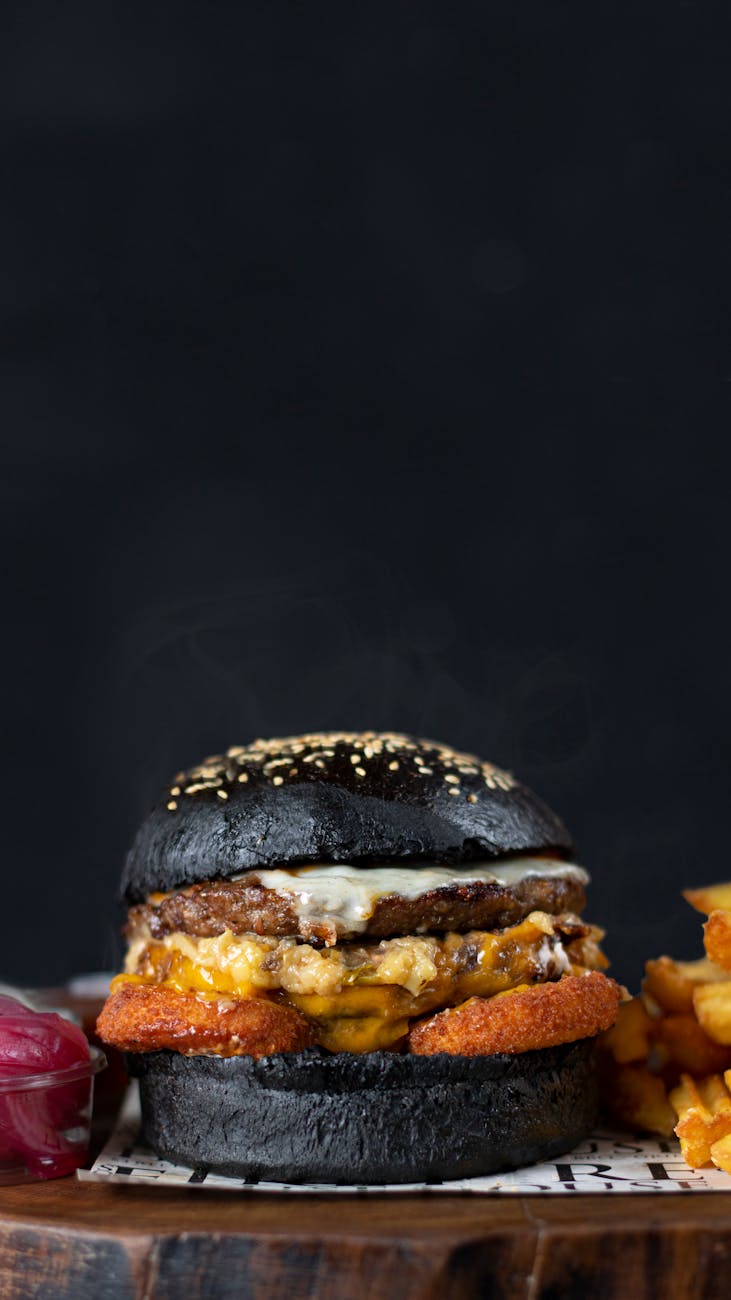
By the late-2010s, we had activated charcoal. Added to juices, smoothies, ice creams, and even lattes, it was marketed as being able to bind to toxins and help “cleanse” the body. The jet-black color made it visually striking as well, which boosted its popularity.
However, the trend was fairly short-lived once health professionals pointed out that activated charcoal could bind to essential nutrients and medications as well… Plus, we already have a liver and kidneys to detoxify the body so it’s not necessary.
In the end, food trends will come and go, but true health isn’t found in quick fixes and miracle products. Instead, if we put the focus on embracing foods we genuinely enjoy and that make our bodies feel good, and if we can become attuned to our unique body’s cues, we can build lasting health that isn’t dependent on half a grapefruit, a weird black burger bun, or that super gross lemon drink.